"Phil is not only a great guy, but he genuinely knows how to solve any problem you throw at him, and we've certainly had a few over the years."
Melanie B., Google review
★★★★★
"Phil is hands-down the best pest control guy we've ever had. He shows up right on time, always friendly and professional, and took the time to actually explain what he was doing and why."
Tanya G., Google review
★★★★★
"Had an amazing experience. They were very quick and efficient, I couldn't have asked for anything more. Phil and his team did an amazing job and couldn't recommend more."
Jorja W., Google review
★★★★★
"Gave me honest and genuine advice and service at a great price."
Google review
★★★★★
"Extremely high standard of work, communication and customer service."
Google review
★★★★★
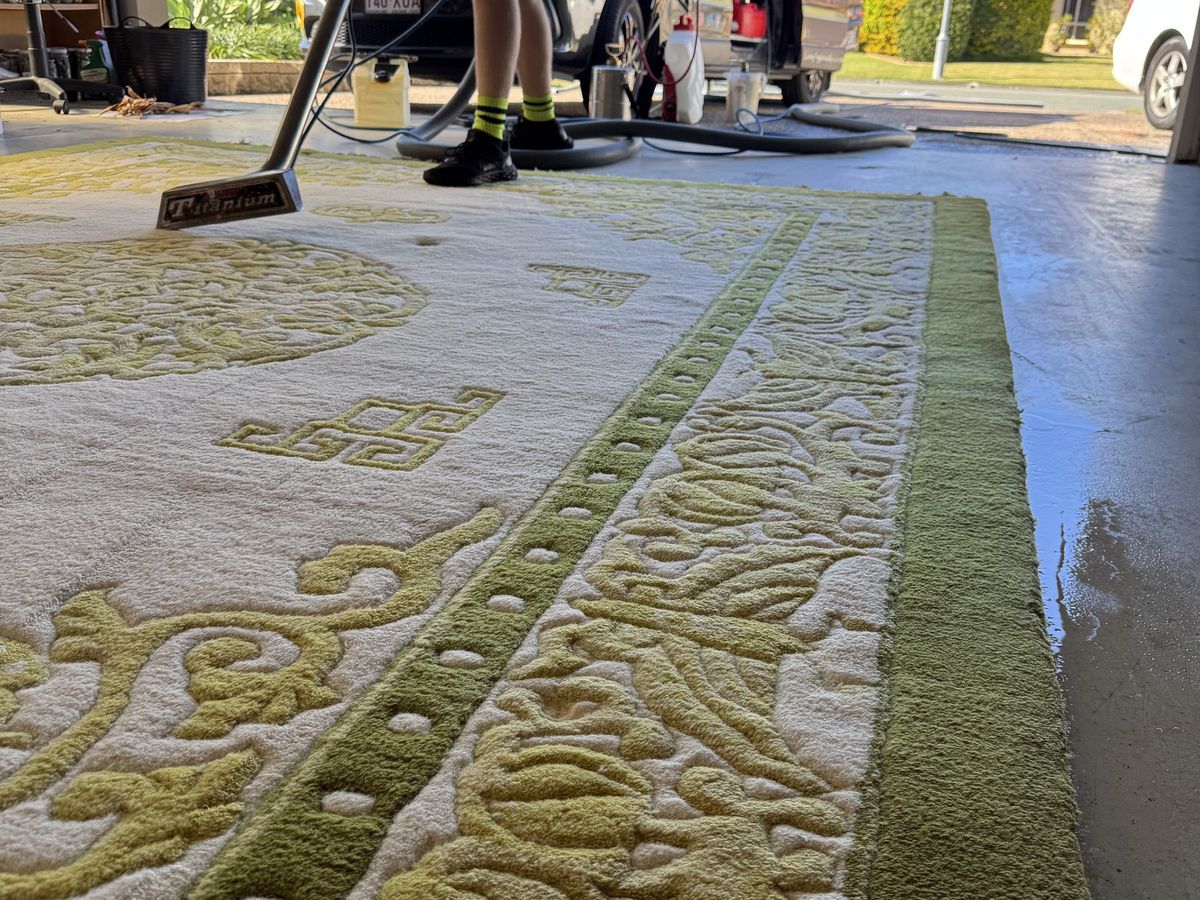
"Phil and Cooper did a fantastic job cleaning our carpet, rugs and furniture."
Google review
Short answer: cold water only, never hot, since heat sets blood's proteins into the fibre rather than lifting them. Blot with cold water and a mild detergent solution, working from the outside of the stain inward, and treat promptly since a fresh blood stain lifts far more easily than one that has set.
Written by Phil, CPH Services Gold Coast. Carpet cleaning technician and licensed pest control technician, working Gold Coast properties since 2011. IICRC accredited. Three Best Rated Best Business, 2016 to 2026.
Why cold water is non-negotiable
Blood contains proteins that heat effectively cooks into the carpet fibre, exactly the same principle that makes hot water the wrong choice for pet urine stains. Cold water keeps those proteins from bonding permanently to the fibre, which is what gives you a real chance of lifting the stain rather than fixing it in place.
Blotting technique that actually works
Blot, do not rub, working from the outside of the stain inward with a clean cloth and cold water mixed with a mild detergent solution. Rubbing spreads the stain and can damage the pile, while blotting lifts it without grinding it further in. Change to a clean section of cloth as it picks up colour.
Hydrogen peroxide: when it helps and when it does not
Hydrogen peroxide can help lift blood on plain, colourfast carpet, but it carries real risk on dyed, patterned or wool carpet, where it can lighten colour. Test on a hidden patch first, and if you are at all unsure, cold water and detergent alone is the safer default.
When a stain has already set
A blood stain left to dry in is genuinely harder to fully remove with DIY methods. Cold water and patience can still improve it, but once a stain has properly set, a professional clean gives the best realistic chance of a full result.
Stain not lifting? Call 1300 85 48 28. We would rather give you an honest read on whether it needs a professional clean than have you keep working at it.
Got questions? Straight answers below. Or skip ahead:
Heat cooks and sets the proteins in blood into the carpet fibre, making the stain far harder to remove afterwards. Cold water keeps those proteins from bonding to the fibre in the first place.
Is hydrogen peroxide safe to use on all carpet?
No. It can lighten colour on dyed or patterned carpet and is generally not suitable for wool. Test it on a hidden patch first, and when in doubt, stick with cold water and a mild detergent solution instead.
What if the blood stain has already dried in?
A dried, set-in blood stain is harder to fully lift with DIY methods alone. Cold water and patience can still improve it, but a professional clean is usually needed for a full result once a stain has genuinely set.
Can old blood stains still be removed professionally?
Often, yes, though results depend on how long the stain has set and what has already been used on it. We will give you an honest assessment before starting rather than guarantee full removal on every stain.
Ready for an honest estimate?
Tell us about the job in 60 seconds. Personal reply, usually the same day. No pressure, no lock-in, no call centre.